Things to see in Gyeongju, Korea
If you want to explore South Korea beyond Seoul and Busan, Gyeongju is one of the most rewarding cities to visit for history, traditional architecture, and beautiful scenery.
Once the capital of the ancient Silla Kingdom, Gyeongju is filled with royal tombs, Buddhist temples, palace ruins, and cultural landmarks that reveal more than a thousand years of Korean history.
But this historic city offers more than ancient monuments.
You can walk between grassy royal burial mounds, relax in traditional-style cafés, explore lively shopping streets, and admire illuminated palace buildings reflected in a pond after sunset.
Among the most important things to see in Gyeongju are Bulguksa Temple, Seokguram Grotto, Daereungwon Ancient Tomb Complex, Cheomseongdae Observatory, Donggung Palace and Wolji Pond, and Woljeonggyo Bridge.
For first-time visitors, the best approach is to spend one day exploring central Gyeongju and, if possible, a second day visiting Bulguksa Temple and Seokguram Grotto.
This guide explains the city’s top attractions, admission information, transportation options, and practical itineraries.
1. Gyeongju Travel Guide: Essential Information
| Information | Details |
|---|---|
| Destination | Gyeongju, South Korea |
| Korean Name | 경주 |
| Province | Gyeongsangbuk-do |
| Historical Significance | Former capital of the Silla Kingdom |
| Main Attractions | Royal tombs, Buddhist temples, historic sites, traditional streets |
| UNESCO Sites | Gyeongju Historic Areas; Seokguram Grotto and Bulguksa Temple |
| Recommended Stay | 1–2 days |
| Best for | History, culture, photography, couples, families |
| Popular Night Attractions | Donggung Palace and Wolji Pond, Woljeonggyo Bridge |
| Main Intercity Rail Station | Gyeongju Station |
| Local Transportation | Buses, taxis, walking, and rental bicycles |
Gyeongju is often described as an open-air museum because significant historical remains can be found throughout the city.
However, its attractions are not all within walking distance.
The central historical district is relatively convenient to explore on foot, while Bulguksa Temple and Seokguram Grotto require additional transportation.
2. Why Is Gyeongju Famous?
Gyeongju served as the capital of the Silla Kingdom, which existed from 57 BCE to 935 CE.
The kingdom played a central role in the political and cultural history of the Korean Peninsula.
Its capital became an important center of Buddhist art, architecture, and royal culture.
Today, visitors can still see impressive evidence of that period.
UNESCO World Heritage in Gyeongju
Gyeongju has two major UNESCO World Heritage designations relevant to visitors.
Gyeongju Historic Areas were inscribed on the World Heritage List in 2000.
The designation covers five areas containing important archaeological and architectural remains, including royal tombs, palace sites, temples, and Buddhist sculptures.
Seokguram Grotto and Bulguksa Temple were jointly inscribed in 1995.
They are internationally recognized for their artistic and architectural importance.
These designations help explain why Gyeongju is one of Korea’s most significant cultural destinations.
3. Bulguksa Temple: A Masterpiece of Korean Buddhist Architecture
Bulguksa Temple is one of the most important attractions in Gyeongju.
Located on the slopes of Tohamsan Mountain, the temple is famous for its stone terraces, traditional buildings, and remarkable pagodas.
Its architecture reflects the religious and artistic achievements of the Silla period.
What Should You See at Bulguksa?
Two of its most famous structures are the Dabotap and Seokgatap pagodas.
These stone pagodas represent outstanding examples of historic Korean craftsmanship.
The temple’s stone stairways and bridges are also especially impressive.
For visitors interested in architecture, Bulguksa offers an opportunity to examine how Buddhist beliefs were expressed through the design of sacred spaces.
Visiting Information
| Category | Details |
|---|---|
| Address | 385 Bulguk-ro, Gyeongju |
| Main Attraction | Buddhist temple architecture and stone pagodas |
| UNESCO Status | World Heritage Site |
| Typical Opening Hours | 9 AM–6 PM |
| Admission | Free under the current cultural heritage temple admission policy |
| Recommended Visit | Approximately 1–2 hours |
Opening hours may change seasonally or because of temple activities.
Visitors should dress respectfully and follow posted instructions regarding photography and restricted areas.
Is Bulguksa Worth Visiting?
Absolutely, particularly for first-time visitors interested in Korean culture.
The temple’s historic architecture and surrounding landscape make it one of Gyeongju’s most distinctive destinations.
However, travelers with only a few hours in Gyeongju should be aware that Bulguksa is outside the central sightseeing district.
4. Seokguram Grotto: An Extraordinary Stone Buddha
Seokguram Grotto is another UNESCO World Heritage Site associated with the artistic achievements of the Silla Kingdom.
Located on Tohamsan Mountain, the grotto contains a remarkable seated Buddha statue surrounded by intricately carved Buddhist figures.
UNESCO recognizes the grotto as an outstanding example of East Asian Buddhist art.
Why Is Seokguram Special?
Unlike a typical temple hall, Seokguram is a carefully constructed artificial stone grotto.
Its design combines religious symbolism, engineering, sculpture, and architecture.
The main Buddha statue is surrounded by figures representing different aspects of Buddhist tradition.
The composition reflects the sophisticated artistic abilities of the Silla period.
Visiting Tips
Seokguram is located away from central Gyeongju.
Many travelers combine it with a visit to Bulguksa Temple.
Public buses may connect the two sites, but departures are less frequent than services in central Gyeongju.
Check the bus timetable before beginning your trip.
Important: Photography restrictions may apply inside the grotto’s protected viewing area.
Because the sculptures are culturally significant, visitors should follow all preservation and visitor guidelines.
5. Daereungwon Ancient Tomb Complex: Walk Among Royal Burial Mounds
Daereungwon Ancient Tomb Complex is one of Gyeongju’s most recognizable landscapes.
The park is filled with large, grass-covered burial mounds associated with Silla royalty and aristocracy.
The tombs create an unusual scene that feels very different from conventional palace or museum visits.
What Makes Daereungwon Interesting?
The burial mounds reveal the importance of funerary traditions during the Silla period.
Some of the tombs have been excavated, revealing valuable artifacts including gold ornaments, ceremonial objects, and horse-related equipment.
Visitors can walk along designated pathways and appreciate the scale of these ancient structures.
Cheonmachong Tomb
One of the highlights is Cheonmachong, known as the Heavenly Horse Tomb.
It is the only tomb within the complex that is open for public interior viewing.
The name comes from an artifact depicting a flying horse discovered during excavation.
Cheonmachong provides a particularly useful introduction to Silla burial practices.
Admission and Opening Hours
| Attraction | Admission | Published Hours |
|---|---|---|
| Daereungwon grounds | Free | 9 AM–10 PM |
| Cheonmachong Tomb | Adults ₩3,000 | 9 AM–10 PM, last admission 9:30 PM |
Reduced rates may apply to eligible visitors.
The exact entrance and interior closing arrangements should be checked before arriving.
Best Time for Photography
Late afternoon is an attractive time to visit.
The changing light creates soft shadows across the grassy burial mounds.
Visitors should remain on the official pathways and never climb the tombs.
6. Cheomseongdae Observatory: A Landmark of Ancient Korean Astronomy
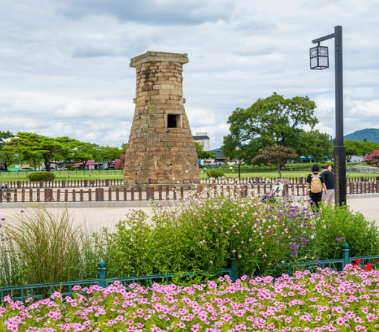
Cheomseongdae Observatory is one of the most recognizable historic structures in Gyeongju.
Built during the reign of Queen Seondeok in the seventh century, it is widely regarded as one of the oldest surviving astronomical observatories in East Asia.
Although relatively small, the stone structure is historically significant.
What Is Cheomseongdae?
Cheomseongdae is a cylindrical stone tower built from carefully arranged blocks.
It is associated with astronomical observation during the Silla period.
The structure illustrates the importance of astronomy, calendar systems, and observation in the ancient kingdom.
Visitors can admire the observatory from the surrounding grounds.
Visitor Information
| Category | Details |
|---|---|
| Address | 140-25 Cheomseong-ro, Gyeongju |
| Admission | Free |
| Summer Opening Hours | 9 AM–10 PM |
| Winter Opening Hours | 9 AM–9 PM |
| Recommended Visit | Approximately 20–40 minutes |
The nearby landscaping changes with the seasons, making the area particularly attractive in spring and autumn.
At night, lighting around the structure creates a different atmosphere.
Can You Visit Daereungwon and Cheomseongdae Together?
Yes.
The two attractions are located relatively close together and work well as part of the same walking itinerary.
They can also be combined with Hwangnidan-gil and nearby historical landmarks.
7. Hwangnidan-gil: Gyeongju’s Trendy Shopping and Café Street
Hwangnidan-gil is one of the best places to experience Gyeongju’s modern cultural scene.
Unlike the ancient temples and archaeological sites, this area focuses on cafés, restaurants, small shops, and contemporary lifestyles.
Many buildings incorporate traditional Korean architectural elements, creating an appealing contrast between old and new.
Things to Do on Hwangnidan-gil
Visitors can explore:
- Hanok-style cafés.
- Korean dessert shops.
- Contemporary restaurants.
- Souvenir and accessory stores.
- Traditional-inspired fashion shops.
- Small independent boutiques.
The street is especially popular among couples and younger travelers.
What Should You Eat?
Look for traditional Korean desserts, rice cakes, locally inspired pastries, or a relaxed meal in a renovated traditional-style building.
Individual restaurants may offer Korean food, fusion cuisine, or international dishes.
Because shops and menus change frequently, it is better to compare current options than rely on an outdated list of businesses.
Practical Shopping Tips
Visit during the afternoon if you want time to explore cafés and shops.
Weekends and holidays may be crowded, particularly around popular photo spots.
Wear comfortable shoes and allow time to discover the smaller side streets.
8. Donggung Palace and Wolji Pond: Gyeongju’s Best Night View
Donggung Palace and Wolji Pond is one of the most beautiful places to visit in Gyeongju after sunset.
The site was once part of the royal palace complex of the Silla Kingdom.
Its landscaped pond and palace buildings reflect the grandeur of the ancient capital.
Why Is It Famous at Night?
After dark, the illuminated traditional buildings are reflected in the still water.
The reflections create an especially striking scene for photography.
The contrast between golden lights, dark water, and traditional Korean rooflines gives the site a distinctive nighttime atmosphere.
Historical Background
The pond was constructed during the Silla period and was associated with royal gatherings and banquets.
It became widely known as Anapji before archaeological research helped restore the historical name Wolji.
Today, it is one of Gyeongju’s most popular evening attractions.
Visiting Information
| Category | Details |
|---|---|
| Location | Central Gyeongju |
| Main Attraction | Palace architecture and pond reflections |
| Published Adult Admission | ₩3,000 |
| Published Opening Hours | 9 AM–10 PM |
| Last Admission | Typically 9:30 PM |
| Best Visit Time | Around sunset and after dark |
The listed admission and operating hours should be confirmed before visiting.
Photography tip: Arrive shortly before sunset to capture both the evening sky and illuminated reflections.
9. Woljeonggyo Bridge: One of Gyeongju’s Most Photogenic Landmarks
Woljeonggyo Bridge is another beautiful destination, especially in the evening.
The original bridge was built during the Unified Silla period and historically connected important areas near Wolseong and Namsan.
The structure was reconstructed through historical research and restoration work completed in 2018.
What Makes the Bridge Special?
The reconstructed wooden bridge features traditional Korean architectural elements.
Its red pillars, decorative roof, and nighttime illumination make it visually impressive.
Visitors can admire the bridge from nearby viewing areas or walk through the structure during permitted hours.
Visitor Information
| Category | Details |
|---|---|
| Location | 274 Gyo-dong, Gyeongju |
| Admission | Free |
| Published Opening Hours | 9 AM–10 PM |
| Main Attraction | Traditional wooden bridge and night scenery |
Woljeonggyo is an excellent addition to an evening itinerary.
Donggung and Wolji vs Woljeonggyo
If you can visit only one nighttime attraction, choose according to your interests.
Donggung Palace and Wolji Pond is particularly famous for palace reflections.
Woljeonggyo Bridge is a strong choice for visitors interested in traditional architecture and a free night-view attraction.
If time permits, visit both.
10. Gyeongju National Museum: Understand the History Behind the Monuments
Gyeongju National Museum is an excellent destination for visitors who want to understand the history of the Silla Kingdom more deeply.
The museum preserves and exhibits cultural artifacts connected to the ancient capital.
What Can You See?
Its collections include items associated with royal life, Buddhism, metal craftsmanship, and ancient Korean culture.
Gold ornaments and archaeological discoveries reveal the sophisticated artistic traditions of Silla.
The museum also provides valuable context for attractions such as Daereungwon, Bulguksa, and the city’s palace remains.
Why Visit the Museum?
Ancient monuments can be impressive even without historical knowledge.
However, visiting the museum helps explain their meaning.
For example, learning about Silla burial practices makes a walk through Daereungwon more informative.
The museum is also a useful indoor option during rainy or extremely hot weather.
General admission to the museum’s permanent exhibitions is typically free, while special exhibitions may have separate arrangements.
Check its official website for the current schedule.
11. More Things to See in Gyeongju
If you have additional time, consider exploring attractions beyond the main historical district.
Yangdong Folk Village
Yangdong is a traditional Korean village recognized by UNESCO as part of the Historic Villages of Korea: Hahoe and Yangdong.
It preserves an impressive collection of traditional Korean houses and reflects aspects of Joseon-era village life.
Unlike the Silla sites in central Gyeongju, Yangdong offers a different historical perspective.
It is particularly appealing to visitors interested in traditional architecture and Korean rural heritage.
Bomun Tourist Complex
Bomun is a recreational area known for its lake, accommodation, walking routes, and leisure facilities.
It provides a contrast to the historic city center.
Families and travelers seeking a more relaxed stay may find this area attractive.
Gyeongju Namsan Mountain
Namsan is an important landscape within the Gyeongju Historic Areas.
Its mountainsides contain numerous Buddhist relics, stone carvings, and archaeological remains.
It is best suited to travelers who enjoy hiking and historic landscapes.
Some trails involve considerable elevation changes.
Plan your route carefully and allow enough daylight.
12. Best Things to See in Gyeongju: Quick Comparison
| Attraction | Main Highlight | Admission | Best For |
|---|---|---|---|
| Bulguksa Temple | UNESCO Buddhist architecture | Free | History and temples |
| Seokguram Grotto | Ancient stone Buddha | Free | Buddhist art |
| Daereungwon | Silla royal burial mounds | Free grounds | Sightseeing and photography |
| Cheonmachong | Interior royal tomb | ₩3,000 adult | Archaeology |
| Cheomseongdae | Ancient astronomical structure | Free | History and photography |
| Hwangnidan-gil | Cafés, restaurants and shops | Free street access | Shopping and dining |
| Donggung and Wolji | Illuminated palace pond | ₩3,000 adult | Night photography |
| Woljeonggyo Bridge | Reconstructed wooden bridge | Free | Scenic evening walk |
| Gyeongju National Museum | Silla artifacts and history | Generally free permanent collection | Museum visitors |
| Yangdong Village | Traditional Korean village | Ticketed | Architecture and culture |
Admission amounts are published reference prices, not live ticket quotes. Check current fees and eligibility before visiting.
13. One-Day Gyeongju Itinerary
If you only have one day, focus on central Gyeongju rather than attempting to visit every attraction.
The historical center allows several major landmarks to be explored on foot.
Morning: Royal Tombs and Historic Streets
Start at Daereungwon Ancient Tomb Complex.
Explore the large burial mounds and consider entering Cheonmachong Tomb.
Afterward, walk toward Hwangnidan-gil.
Stop for coffee or lunch at one of the area’s cafés or restaurants.
Afternoon: Ancient Astronomy and Local History
Continue to Cheomseongdae Observatory.
Explore the nearby historical grounds and, if time permits, visit Gyeongju National Museum.
These attractions provide insight into the history and culture of the Silla Kingdom.
Evening: Gyeongju’s Illuminated Heritage
Finish the day with Donggung Palace and Wolji Pond.
Its illuminated buildings and reflections make it one of the city’s signature evening attractions.
If you have enough time, add Woljeonggyo Bridge.
One-day itinerary summary:
Daereungwon → Hwangnidan-gil → Cheomseongdae → Gyeongju National Museum → Donggung and Wolji → Woljeonggyo Bridge.
This is a suggested sightseeing order. Exact timings depend on walking speed, opening hours, and transportation.
14. Two-Day Gyeongju Itinerary
A two-day visit allows you to explore both the central historical area and the mountain temples.
Day 1: Historic Downtown Gyeongju
Visit Daereungwon, Cheomseongdae, Hwangnidan-gil, and Gyeongju National Museum.
End the evening at Donggung and Wolji Pond or Woljeonggyo Bridge.
Day 2: UNESCO Temples and Mountain Scenery
Travel to Bulguksa Temple in the morning.
Explore the temple grounds and its famous stone pagodas.
Continue to Seokguram Grotto if transportation schedules allow.
Because these attractions are outside central Gyeongju, allow more time for travel.
Afterward, return to the city or explore another attraction according to your interests.
Which Itinerary Is Better?
| Travel Style | Recommendation |
|---|---|
| Short stopover | One day in central Gyeongju |
| First-time cultural visit | Two days |
| Temple enthusiast | Reserve a day for Bulguksa and Seokguram |
| Photography-focused trip | Include an overnight stay for night views |
| Family with children | Plan fewer stops and longer breaks |
A two-day itinerary generally offers a more comfortable experience than trying to see every major attraction in one day.
15. How to Get to Gyeongju
From Seoul
High-speed rail is a convenient option for travelers departing from Seoul.
Use the official KORAIL reservation service to search for trains to Gyeongju Station.
Travel times depend on the specific train and departure station.
After arriving, use local buses or taxis to reach the historical center.
From Busan
Gyeongju is also accessible from Busan by rail and other transportation options.
The most convenient route depends on where you are staying in Busan.
Compare the total travel time to your first attraction, rather than only the train journey.
Getting Around Gyeongju
Central attractions such as Daereungwon, Cheomseongdae, and Hwangnidan-gil are relatively convenient to explore on foot.
Public buses and taxis are useful for reaching places farther away.
Gyeongju’s city tourism information identifies buses 10 and 11 among services connecting major sightseeing areas, including the Bomun district and Bulguksa.
However, routes, departure intervals, and stops can change.
Check a local transportation app for current connections.
Do You Need a Rental Car?
Not necessarily.
Travelers focusing on central Gyeongju can explore much of the historical district without a car.
However, a car or organized tour may simplify travel to more distant attractions.
16. Best Time to Visit Gyeongju
Gyeongju is worth visiting throughout the year, but each season offers a different atmosphere.
| Season | Advantages | Considerations |
|---|---|---|
| Spring | Cherry blossoms and comfortable walking weather | Popular attractions may become crowded |
| Summer | Green landscapes and longer daylight | Heat, humidity and rain |
| Autumn | Colorful foliage and comfortable sightseeing | Busy weekends and cooler evenings |
| Winter | Quieter attractions and crisp landscapes | Cold temperatures and shorter daylight |
Spring in Gyeongju
Cherry blossoms make the city’s historic streets and parks especially attractive.
Flowering dates change each year depending on weather.
Avoid planning an entire trip around an assumed peak bloom date without checking local forecasts.
Autumn in Gyeongju
Autumn is particularly enjoyable for outdoor heritage sightseeing.
The colorful scenery around temples and historical grounds creates excellent photography opportunities.
Gyeongju at Night
Regardless of the season, consider staying until after sunset.
Donggung Palace and Wolji Pond, Woljeonggyo Bridge, and illuminated historic landmarks offer a different perspective on the city.
17. Practical Tips for First-Time Visitors
Wear comfortable shoes. Exploring central Gyeongju involves substantial walking.
Separate downtown and outlying attractions. Bulguksa and Seokguram are not immediately beside Daereungwon or Hwangnidan-gil.
Check opening hours. Some attractions close earlier in winter, and last-admission times may differ from closing times.
Respect heritage sites. Do not climb ancient tombs, touch protected artifacts, or enter restricted sections.
Allow time for night views. Donggung and Wolji Pond is especially appealing after the lights are switched on.
Use accurate Korean place names. Searching Korean names in local map apps can make transportation easier.
Avoid overplanning. Gyeongju rewards visitors who allow time to appreciate its historic atmosphere.
18. Frequently Asked Questions
1. What are the best things to see in Gyeongju, Korea?
The top attractions include Bulguksa Temple, Seokguram Grotto, Daereungwon Ancient Tomb Complex, Cheomseongdae Observatory, Donggung Palace and Wolji Pond, Woljeonggyo Bridge, and Hwangnidan-gil.
2. Is one day enough to visit Gyeongju?
One day is enough to see several attractions in central Gyeongju. However, two days are better if you want to include Bulguksa Temple and Seokguram Grotto without rushing.
3. Is Gyeongju worth visiting from Seoul?
Yes, particularly for travelers interested in Korean history, UNESCO World Heritage Sites, Buddhist architecture, and traditional culture. High-speed rail makes Gyeongju accessible from Seoul.
4. What is the best place to visit in Gyeongju at night?
Donggung Palace and Wolji Pond is especially famous for its illuminated traditional buildings reflected in the water. Woljeonggyo Bridge is another excellent night-view destination.
5. Can you explore Gyeongju without a car?
Yes. Many central attractions are within a walkable sightseeing area, while buses and taxis can help visitors reach Bulguksa, Seokguram, and other outlying destinations.
19. Final Thoughts: Is Gyeongju Worth Visiting?
Gyeongju is one of South Korea’s most rewarding destinations for travelers who want to understand the country’s history.
Its royal tombs, ancient observatory, Buddhist temples, and palace remains offer an extraordinary introduction to the Silla Kingdom.
At the same time, Hwangnidan-gil, traditional-style cafés, and beautiful nighttime attractions make the city appealing even to travelers who are not usually interested in museums or archaeology.
For first-time visitors, three recommendations stand out.
First, explore central Gyeongju on foot, beginning with Daereungwon and Cheomseongdae.
Second, stay until evening to see Donggung Palace and Wolji Pond illuminated.
Third, allow a second day for Bulguksa Temple and Seokguram Grotto if your schedule permits.
Whether you visit for a day or spend a weekend, Gyeongju offers an opportunity to experience the historical heart of Korea.
Information reviewed: October 22, 2026. Admission prices, opening hours, transportation schedules, and visitor restrictions may change. Confirm the latest details with official tourism providers before traveling.